Featuring real floating diamond jewellery handcrafted in our Isle of Wight showroom.
What is a Floating Diamond? (Quick Answer)
A floating diamond is a diamond designed to appear as though it is suspended in mid-air with little or no visible setting. The effect is achieved using hidden engineering, tension settings, drilled diamonds, fine wire supports, or minimal metalwork to maximise light, brilliance, and simplicity.
Floating diamond jewellery includes:
- Floating diamond necklaces
- Floating diamond pendants
- Floating diamond engagement rings
- Floating diamond earrings
- Tension-set diamond rings
- Invisible or suspended diamond designs
The appeal lies in the illusion itself — the diamond becomes the entire focus of the design.
Why Floating Diamond Jewellery Has Become So Popular
Over the last decade, jewellery design has moved steadily toward cleaner, more minimal styling. Many buyers now prefer jewellery with:
- Less metal
- More visible diamond surface
- Contemporary styling
- Elegant simplicity
- Lightweight everyday wearability
A floating diamond setting enhances the diamond visually because the eye sees more of the gemstone and less of the setting holding it.
In many cases, a floating setting can make a diamond appear larger, brighter, and more dramatic compared with a traditional heavy claw setting.
Different Types of Floating Diamond Settings
Floating diamonds are created in several different ways. Some rely on advanced engineering, while others use extremely fine metalwork to create the illusion of suspension.
1. Tension-Set Floating Diamonds
A tension setting uses pressure from the metal itself to hold the diamond securely in place.
The diamond appears suspended between two ends of the ring or pendant with minimal visible support.
This remains one of the most technically impressive floating diamond styles because the setting must be engineered with absolute precision.
2. Drilled Diamond Floating Necklaces
One of the simplest — yet most effective — floating necklace designs uses a drilled diamond.
A tiny precision drill hole passes through the diamond, allowing a fine jump ring or wire loop to suspend the stone directly from a chain.
This creates one of the cleanest and most minimalist floating diamond effects possible.
Unlike many commercial floating pendants, the diamond itself becomes the entire pendant design.
Our Latest Floating Diamond Necklace Design
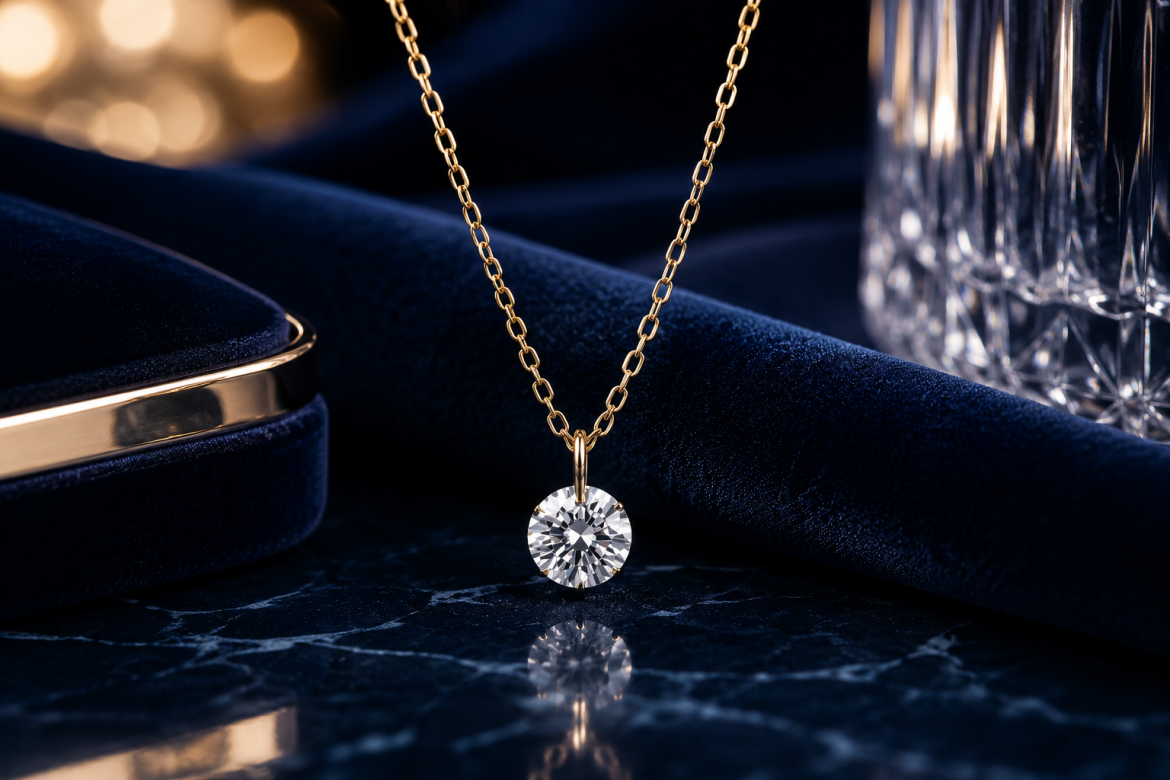
One of our newest floating diamond necklace designs demonstrates just how refined a minimalist pendant can become.
How We Created Our Floating Diamond Necklace
We created our floating diamond necklace from an ethical lab-grown round brilliant-cut diamond. A precision 0.4mm drill hole allows a fine 9ct Gold wire ring to pass directly through the diamond itself. Once formed and sealed with heat, the delicate jump ring provides the suspension point for a fine trace chain.
The result is an exceptionally minimalist pendant design where the diamond moves naturally during wear, trembling subtly with light and motion.
Because of the delicacy of the setting, this design works especially well as a pendant rather than a ring, where everyday impacts and wear would place greater stress upon the diamond.
Using a lab-grown diamond allows us to create this design with a beautiful 4mm round brilliant-cut diamond while keeping the price below £200 GBP. We currently create this design in very limited numbers from our Isle of Wight showroom workshop.
Floating Diamond Engagement Rings
Floating diamond engagement rings create an even more dramatic effect because the diamond appears elevated above the band with minimal support.
These designs often expose much more of the diamond to light, increasing brilliance and creating a clean side profile.
Popular floating ring styles include:
- Tension-set rings
- Hidden support settings
- Open gallery settings
- Suspended solitaire designs
- Minimal claw illusion settings
Example 1. The Unity Engagement Ring
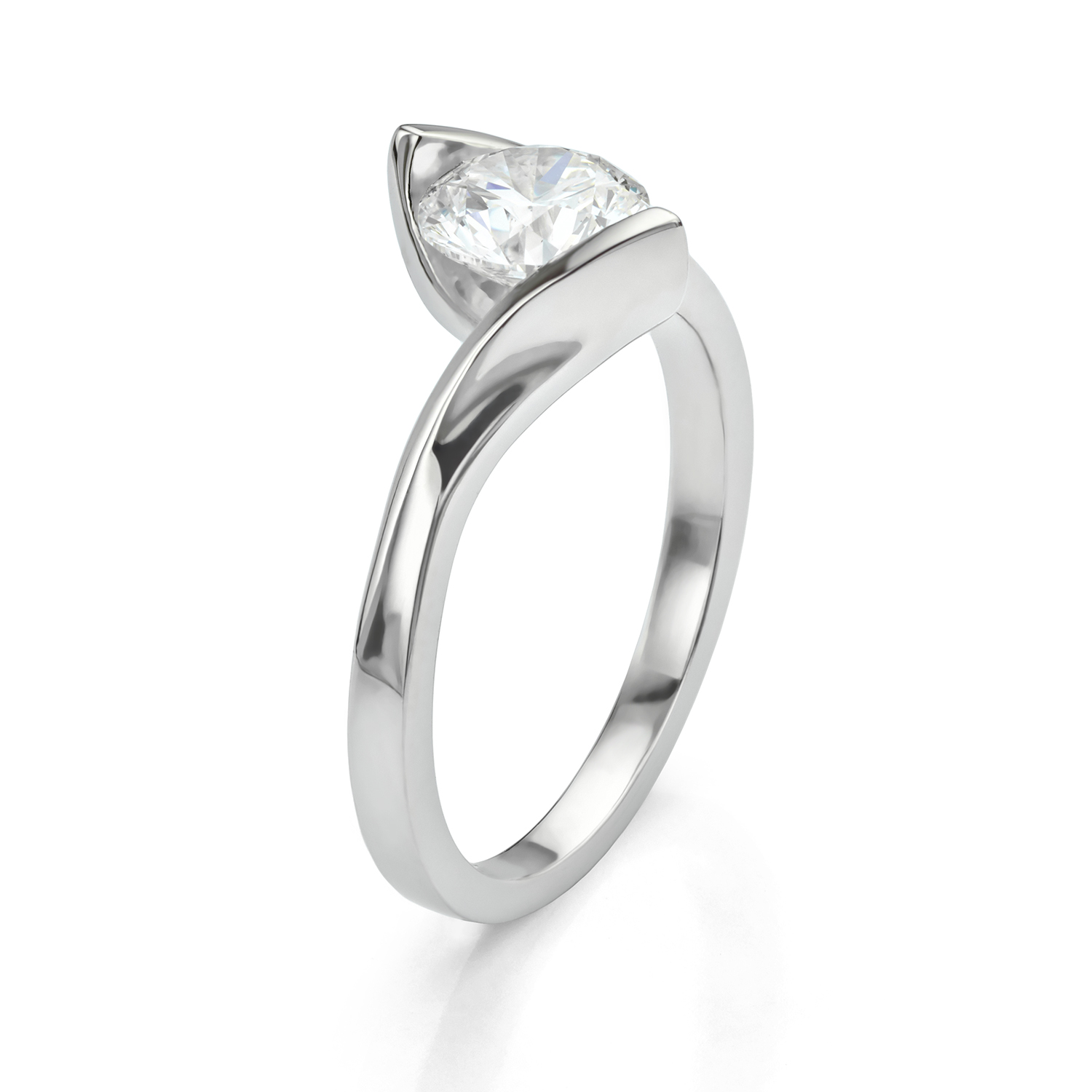
Unity floats a diamond within a tension setting. Shown here with a 1.20 carat diamond.
The Unity is one of our most popular solitaire engagement ring styles. Held under tension, the diamond sits between the embrace of the setting. Crafted over 5 weeks, we make each Unity engagement ring individually to order. This remains one of our most sought-after diamond engagement ring styles.
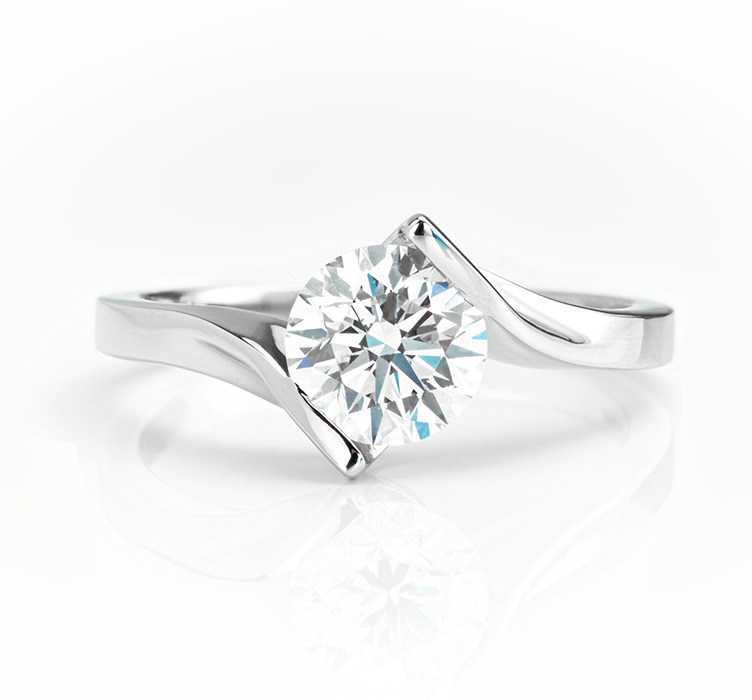
The Unity diamond engagement ring is set with a round brilliant-cut solitaire diamond. Available with a choice of natural or lab-grown diamonds.
<span data-mce-type=”bookmark” style=”display: inline-block; width: 0px; overflow: hidden; line-height: 0;” class=”mce_SELRES_start”></span>
Using a precision-drilled round brilliant-cut diamond, we created a pendant where the stone hangs freely from a delicate 0.4mm 9ct Gold wire jump ring — suspended directly from a fine Yellow Gold chain.
The result is incredibly subtle:
- No bulky setting
- No claws
- No surrounding mount
- Just light, movement, and diamond brilliance
The diamond gently trembles and moves during wear, catching light continuously from every angle.
Because the setting is almost invisible, the entire focus remains on the diamond itself.
The design shown below was handcrafted in our Ryde showroom on the Isle of Wight.
Are Floating Diamond Settings Safe?
This is one of the most common questions buyers ask.
The answer depends entirely on the design.
Floating Diamond Necklaces
Floating necklaces are generally very safe because pendants experience relatively little direct impact during wear.
Drilled diamond pendants are particularly effective for everyday wear because there are very few protruding parts to catch or loosen.
Floating Diamond Rings
Floating engagement rings require much more careful engineering.
A poorly made tension ring or minimalist setting can expose the diamond to greater risk from:
- Hard knocks
- Twisting force
- Edge impact
- Pressure against hard surfaces
For this reason, floating engagement rings should always be made by experienced jewellers familiar with advanced setting techniques and structural tolerances.
Natural vs Lab-Grown Floating Diamonds
Both natural and lab-grown diamonds work beautifully within floating settings.
In fact, floating designs often suit lab-grown diamonds particularly well because:
- Larger diamond sizes become more affordable
- Minimal settings maximise visible size
- Contemporary styling complements modern lab-grown jewellery trends
Many floating necklaces use:
- Round brilliant-cut diamonds
- Oval diamonds
- Pear-shaped diamonds
- Emerald-cut diamonds
Round brilliant diamonds remain the most popular because they provide maximum sparkle from every viewing angle.
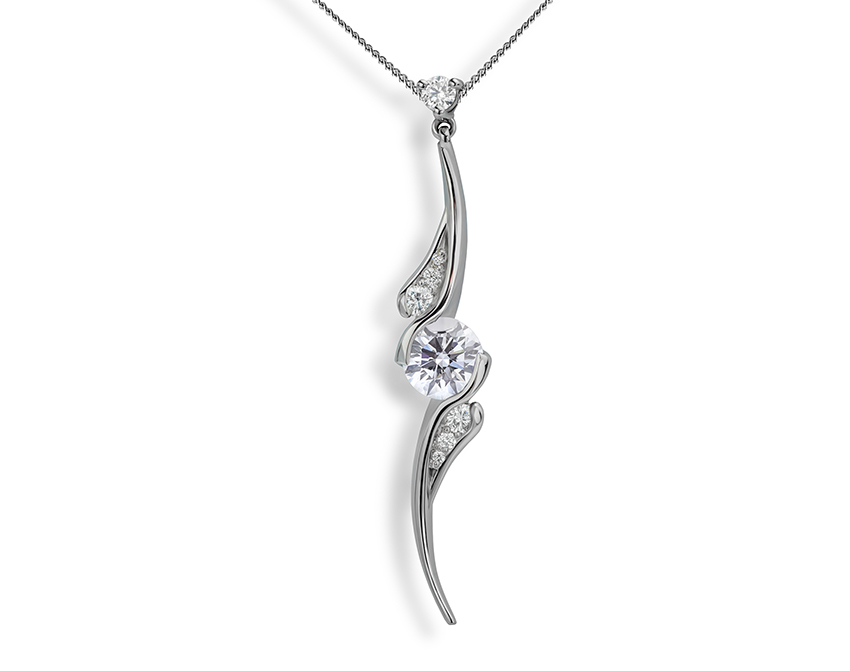
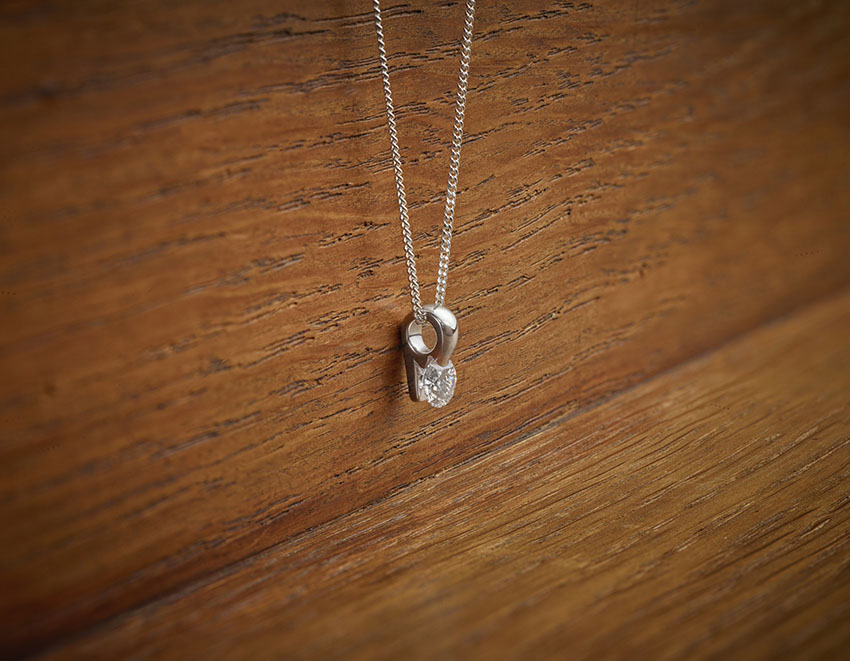
Advanced engineering, CAD design and a floating diamond pendant
One of our most recent bespoke necklace commissions—a floating diamond necklace—featured a deceptively simple setting. A D Flawless diamond is held under tension provided by a solid Platinum pendant setting to provide a unique yet contemporary design created for our returning client.
Why Floating Diamond Jewellery Looks More Brilliant
Traditional settings partially block light from entering the diamond.
Floating designs reduce visible metal around the stone, allowing:
- More light return
- Better side visibility
- Increased scintillation
- Stronger contrast patterns
The result is often a brighter-looking diamond with greater visual impact.
This is especially noticeable in:
- Smaller diamonds under 0.50cts
- High-colour diamonds
- Excellent-cut round brilliants
Floating Diamond Jewellery — Minimalism at its Best
The best floating diamond jewellery looks deceptively simple.
But behind every successful floating design lies:
- Careful engineering
- Precise proportions
- Balance
- Structural strength
- Advanced craftsmanship
When executed properly, floating diamond jewellery achieves something rare in design — technical complexity hidden behind effortless simplicity.
That is exactly why floating diamond necklaces and rings continue to grow in popularity among buyers seeking refined, contemporary jewellery.
Frequently Asked Questions About Floating Diamonds
What is a floating diamond necklace?
A floating diamond necklace is a necklace where the diamond appears suspended with little or no visible setting, creating a minimalist and elegant appearance.
How are floating diamonds held in place?
Floating diamonds may be secured using tension settings, hidden supports, drilled diamonds, fine wire loops, or invisible-style mountings.
Are floating diamond rings secure?
Yes — when professionally engineered. Tension-set and floating rings require precise craftsmanship to ensure long-term durability.
Do floating diamond necklaces move?
Yes. Many floating diamond pendants are designed to move subtly during wear, helping the diamond catch light naturally.
Can lab-grown diamonds be used in floating settings?
Absolutely. Lab-grown diamonds are commonly used in floating necklaces and rings and work especially well in minimalist designs.
Are drilled diamonds real diamonds?
Yes. A drilled diamond is a genuine diamond with a tiny precision hole added for suspension or setting purposes.
Explore Floating Diamond Jewellery
At Serendipity Diamonds, we create bespoke floating diamond necklaces, pendants, and engagement rings from our Ryde showroom on the Isle of Wight.
Our latest floating diamond necklace design features:
- A precision-drilled round brilliant diamond
- Fine 0.4mm 9ct Gold wire suspension
- Minimalist handcrafted styling
- Natural movement and brilliance
- Handmade finishing in our showroom workshop
Whether created using advanced tension settings or deceptively simple drilled diamonds, floating jewellery remains one of the purest ways to showcase the beauty of a diamond.

About Mark Johnson
Mark founded Isle of Wight jewellers Serendipity Diamonds in 2007 after a career on the polished diamonds industry. Today he works in the Serendipity showroom, helping clients with jewellery, creating handmade designs and updating their two jewellery websites SerendipityDiamonds.com and Isle-of-Wight-Jewellery.co.uk
PakarPBN
A Private Blog Network (PBN) is a collection of websites that are controlled by a single individual or organization and used primarily to build backlinks to a “money site” in order to influence its ranking in search engines such as Google. The core idea behind a PBN is based on the importance of backlinks in Google’s ranking algorithm. Since Google views backlinks as signals of authority and trust, some website owners attempt to artificially create these signals through a controlled network of sites.
In a typical PBN setup, the owner acquires expired or aged domains that already have existing authority, backlinks, and history. These domains are rebuilt with new content and hosted separately, often using different IP addresses, hosting providers, themes, and ownership details to make them appear unrelated. Within the content published on these sites, links are strategically placed that point to the main website the owner wants to rank higher. By doing this, the owner attempts to pass link equity (also known as “link juice”) from the PBN sites to the target website.
The purpose of a PBN is to give the impression that the target website is naturally earning links from multiple independent sources. If done effectively, this can temporarily improve keyword rankings, increase organic visibility, and drive more traffic from search results.