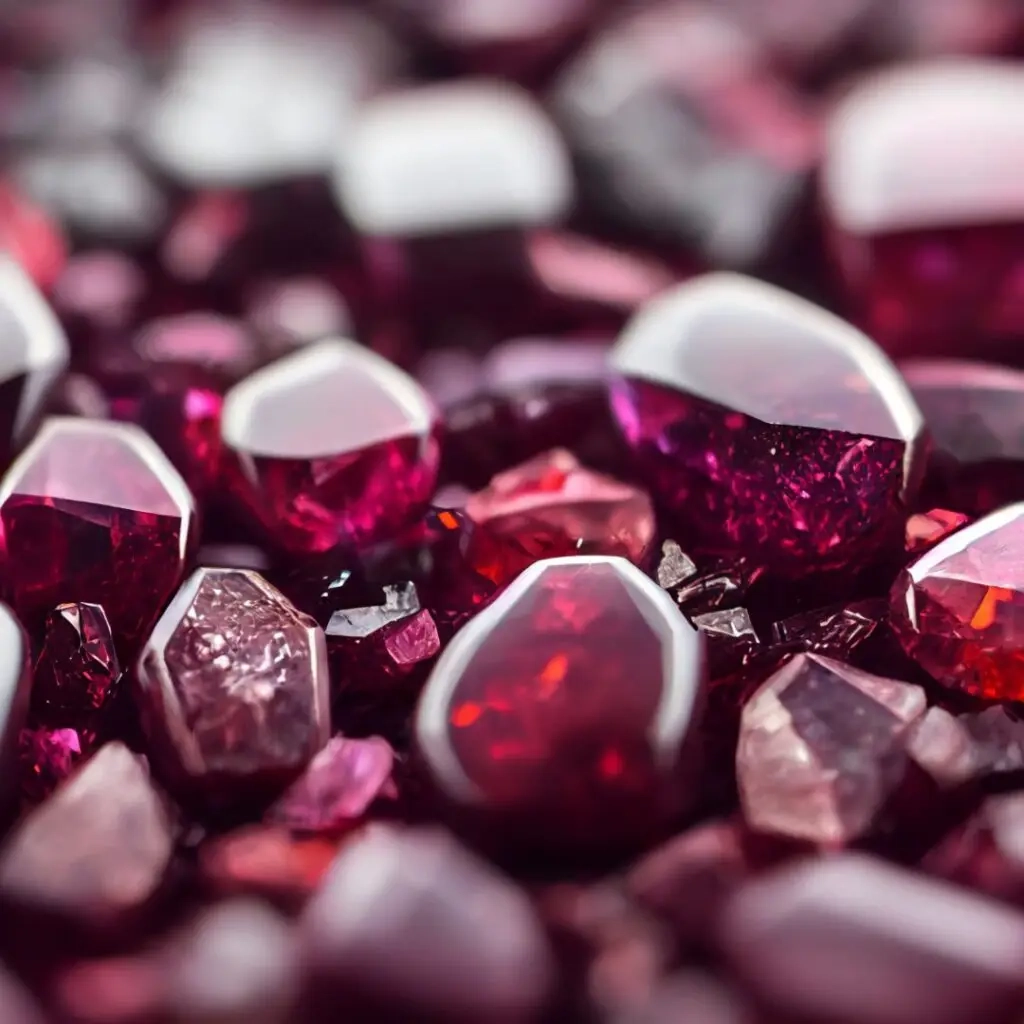
Garnet is January’s birthstone, a deep, rich red gemstone celebrated for its dark red colour, transparency, and inexpensive appeal.
Most sources of this gemstone aresedimentary rocks with high aluminium content, such as shale. To explain, the rock metamorphoses under high heat and pressure, forming.
Garnets throughout time
A colourful history spanning cultures and civilisations. Its name derives from the Latin “granatus,” meaning “grain” or “seed,” reflecting its resemblance to pomegranate seeds. The earliest traces of garnet can be found in ancient Egyptian jewellery dating back over 5,000 years, where it was cherished not only for its aesthetic appeal but also for its supposed protective properties.
The Romans, too, were captivated by the deep red hues of garnet, considering it a symbol of love and passion. During the Middle Ages, it gained popularity among clergy members who believed it offered spiritual guidance and protection. The gemstone’s prominence rose during the Renaissance, adorning the regalia of European monarchs and nobility.

Transitioning into the 18th and 19th centuries, garnet experienced a resurgence in popularity, with Bohemian garnet jewellery becoming highly sought after. In the Victorian era, the gemstone was often exchanged as a token of affection and featured prominently in sentimental jewellery. As the 20th century began, garnet maintained its allure, with new varieties such as the vibrant green Tsavorite garnet discovered in East Africa.
Today, garnet remains a beloved gemstone, cherished for its diverse range of colours, including red, green, orange, and even rare blue hues. Its enduring popularity is a testament to its timeless beauty and the captivating narrative woven into the tapestry of human history. Whether set in a vintage heirloom or a contemporary design, garnet remains a gemstone that transcends time, captivating the hearts of those who appreciate both its aesthetic and historical significance.
Shapes, colours and sizes
Available in many different colours. For example, green, red, yellow and orange. In addition, these birthstone gemstones occur in many shapes and sizes.
Our example below features our limited-edition gemstones, available from our Ryde showroom or online shop.

Alternative to Ruby
Garnet makes an excellent alternative to Ruby. In particular, when you consider the cost difference. Similarly, most jewellers include gem-quality Garnet in their gemstone birthstone selections.
Is it hardwearing?
Garnet is fairly hardwearing, measuring 6.5 – 7.5 on the Mohs Scale. Therefore, it is a popular choice forbirthstone rings,as well as for many other types of jewellery. In fact, jewellers favour this gemstone, which debuts in the month of January. Furthermore, it makes a perfect introduction for the Valentine’s Day season.
Many sources suggest that this gemstone is sensitive to heat. Therefore, we recommend care during jewellery making where high temperatures are used.
Types of Garnet
This gemstone varies considerably in its chemical composition and crystal structure. In fact, a wide variety exists, as outlined below and summarised in the table below.
| Garnet Variety | Garnet Colour Range |
|---|---|
| Almandine | Deep red to brownish-red |
| Pyrope | Red to purplish-red |
| Spessartine | Orange to reddish-brown |
| Grossular | Green, yellow, orange, brown |
| Andradite | Green, brown, black |
| Uvarovite | Green |
| Rhodolite | Purplish-red to pinkish-red |
| Malaya | Pink, peach, brown |
Hydrogrossular: Bluish-green Garnet with far less transparency.
Pyrope Spessartine:Chrome pyrope garnet is a perfect alternative to Ruby, prized for its deep red tones.Spessartine: Orange variety, most prized for its Mandarin orange colour.
Uvarovite: Rare, dark, rich green, usually in small sizes and compared by many to Emerald.
Almandine Garnet: The most common gemstone in the Garnet family—available in many colours. The blend of almandine and pyrope forms the deep-red variety most people associate with this popular gemstone.
Andradite: One of the rarest varieties of Garnet. Some suggest this type of gemstone has even more fire than a diamond. Green demantoid is highly valued amongst collectors.
Grossular: Available in many colours. This type suits jewellery with bright and vivid colours with the exception of blue.
The Spessartite-Grossular-Pyrope colour-change Garnet can change colour from light blue-green to purple under different fluorescent light sources. In addition, daylight causes the colour to appear light red to purple-red.
Gemologists and gemstone dealers further categorise wide varieties into subdivisions depending on their colour. For example, demantoid is a vivid green variety of andradite that collectors highly coveted.
Tsavorite and Hessonite are types of grossular. Tsavorites are green, while Hessonite ranges from orange to orangish-red to brown-red. Rhodolite is a purplish-red version of the gemstone.
January Birthstone Engagement Ring
Garnet can make an ideal gemstone for an engagement ring. In particular, it is favoured over Ruby as a less-expensive alternative. Furthermore, it contrasts very well when used as a centre stone with April’s birthstone – diamond.
Most of our ring designs can be set with this intense birthstone instead of a diamond. In addition, this gemstone adds full contrast when set alongside brilliant white diamonds. As displayed here in our Sienna engagement ring.
Bespoke garnet ring designs
As part of our work at Serendipity Diamonds, we are fortunate to create many incredible jewellery commissions for clients. We completed a commission for a returning local client for a January birthstone ring. The ring featured a 1.30-carat deep-red garnet, set within a vintage halo of natural diamonds, and was crafted in 950 Platinum.

Necklace designs
The garnet and diamond halo necklace has been introduced to our showroom-ready collection. At the heart of the pendant, a 4.87-carat red garnet provides intense, vibrant colour, surrounded by 1.08 carats of 100% ethical lab-grown diamonds.
The necklace was crafted in 9-carat white gold and included an 18-inch tracechain suspended from an articulated loop. Contact our team to re-create this bespoke halo necklace.
Nouveau
Available from our ready-to-wear collection, the Nouveau necklace is set with two teardrop garnet gemstones and crafted in 9ct Yellow Gold. It makes the perfect January birthstone gift.

Garnet Mines
The following mines are famous for Garnets, along with a range of gemstones.
- Roxbury Mines (Connecticut, USA):
- Operating since the late 19th century, these Connecticut mines have a rich history of producing garnets and attract collectors and enthusiasts.
- Bohemian Mines (Czech Republic):
- Renowned for centuries, these mines in the Bohemian region of the Czech Republic have been a historical source of the deep red garnets popular in Victorian jewellery.
- Umba Valley Mines (Tanzania):
- Located in the Umba Valley, these mines in Tanzania produce almandine and rhodolite garnets known for their vibrant colours.
- Tsavo National Park (Kenya):
- The birthplace of Tsavorite, a green garnet variety discovered in the 1960s, these mines in Kenya have added a new dimension to the gemstone industry.
- Rajasthan Mines (India):
- Mines in Rajasthan, India, contribute to the country’s rich gemstone heritage, producing various types of garnets.
Caring For Garnet Jewellery
To maintain its brilliance, avoid exposing garnet to harsh chemicals or extreme temperatures. Clean gently with a mild soap and lukewarm water, and pat dry with a soft cloth. Store separately from other gemstones to prevent scratches, and remove jewellery during strenuous activities. By following these simple care tips, you ensure that your jewellery continues to shine through the ages, a testament to both its historical significance and enduring beauty.

About Mark Johnson
Mark founded Isle of Wight jewellers Serendipity Diamonds in 2007 after a career in the polished diamonds industry. Today he works in the Serendipity showroom, helping clients with jewellery, creating handmade designs and updating their two jewellery websites SerendipityDiamonds.com and Isle-of-Wight-Jewellery.co.uk
Streaming Film
Nonton Film gratis
Jasa Backlink
Download Anime Batch